

 "Giant" House Spiders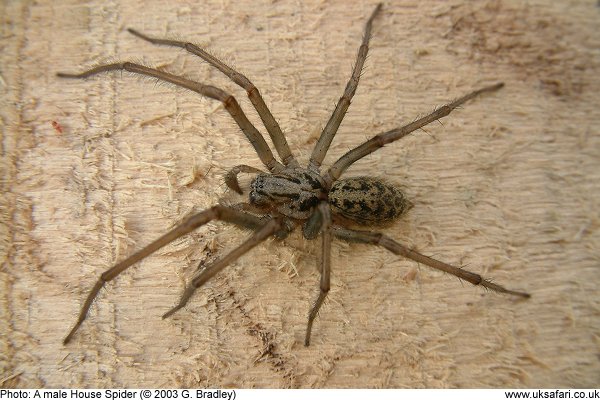

 Quick Facts
Scientific name: Eratigena formerly Tegenaria
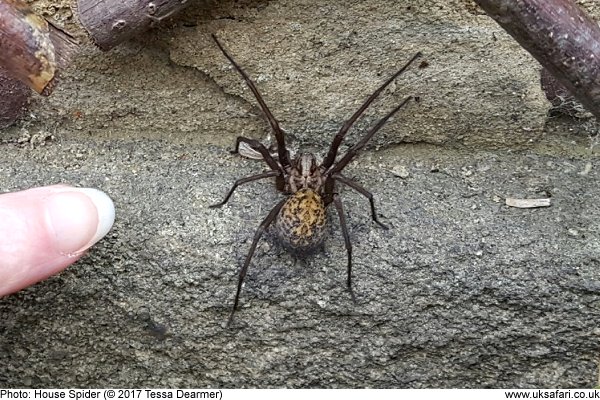
Size: Body and head 10mm to 14mm. Legs 50 to 60mm
Distribution: Found throughout the UK
Months seen: All year round
Habitat: Woodlands, gardens, houses (especially attic spaces), log piles, sheds, garages and other out buildings
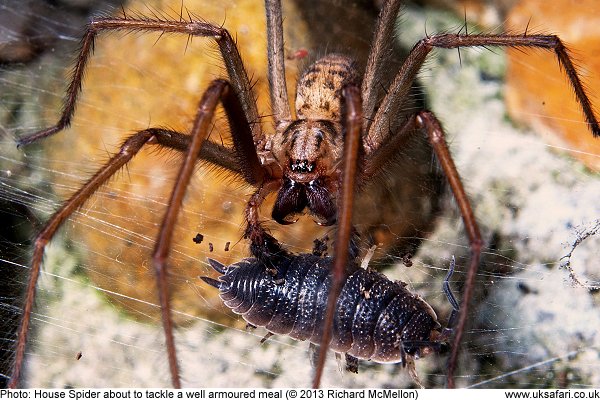
Food: Small invertebrates which are caught in a sheet web. House spiders can survive for several months without food or water
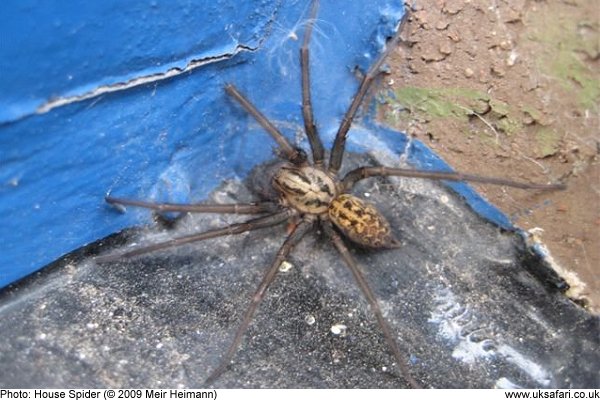
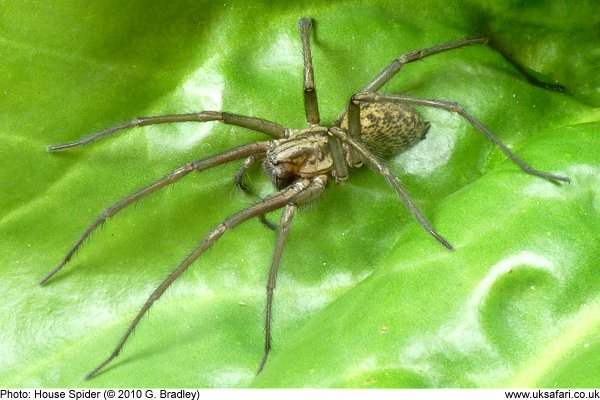
Special features: The Giant House Spider (Eratigena atrica) is one of several similar looking species which inhabit houses and outbuildings - hence the common name "House Spiders".
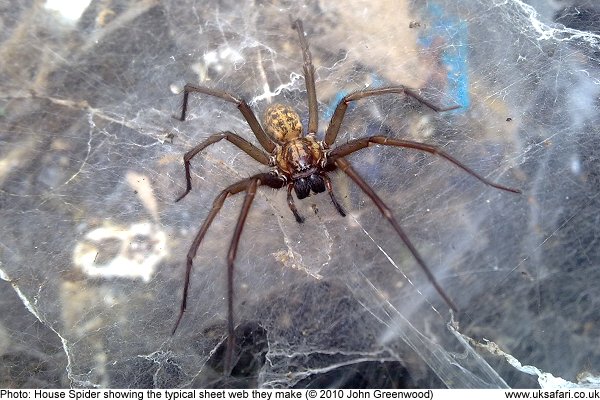
These spiders make a thick sheet web, about 15cm across, usually in a neglected corner of a house or shed. The web has a tubular retreat at the rear where the spider sits and waits for dinner to drop by.
They become more noticeable in autumn, which is their mating season. The males are often seen scuttling across a room or falling into bath tubs as they move around in search of a female. The males have longer legs than the females, while the females have broader abdomens than the males.
The 'Aggressive House Spider' (Eratigena agrestis formerly Tegenaria agrestis), which has been made famous by a thousand Internet horror stories, belongs to the same Genus of spiders. Agrestis is rarely seen in houses, preferring sheds, garages, and log piles. In the United States, where it's known as the 'Hobo Spider', it has a reputation for biting humans with very little provocation. The ones found in Europe are quite timid in comparison, preferring to run for cover.
 Related Pages



 Popular Pages
Amphibians, Bats, Badgers, Beetles, Birds, Birds of Prey, Bumble Bees, Butterflies, Caterpillars, Creepy-Crawlies, Deadly Spiders, Dolphins, Dragonflies, E-Postcards, False Widow Spiders, Free Newsletter, Frogs, Fungi, Garden Spiders, Glow-Worms, Grey Squirrels, Hedgehogs, House Spiders, Ladybirds, Mammals, Marine Mammals, Moths, Owls, Reptiles, Spiders, Toads, Trees, Wildlife Hospitals
Copyright © 2020 G. Bradley UK Safari. All rights reserved | About Us | Links | Contributors