

 Barn Owls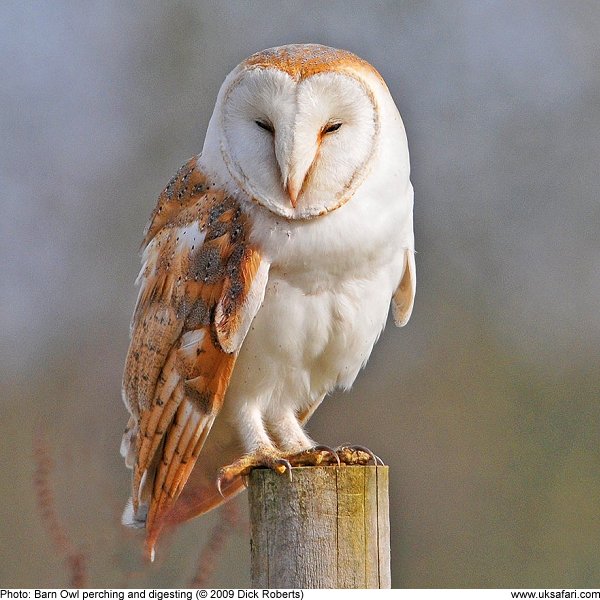

 Quick Facts
Scientific name: Tyto alba
Size: Approx 32cm to 34cm
Distribution: Found in most parts of the UK except the north of Scotland
Months seen: All year round
Life Span: Average 4 years but can be much longer
Habitat: Farmland. Hunts along the edges of fields
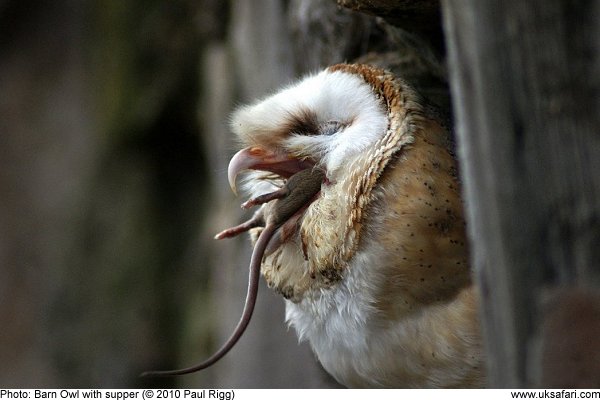
Food: Mostly voles and mice
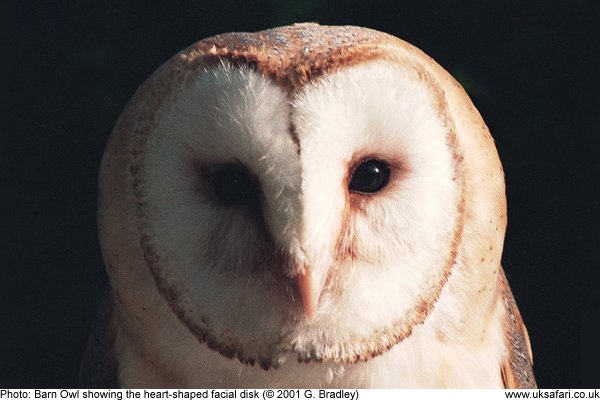
Special features: Barn owls can be easily recognised by their light coloured plumage, which is white on the front, and orange-brown on the back, speckled with some ash grey markings. They have a heart shaped disc of feathers around the face.
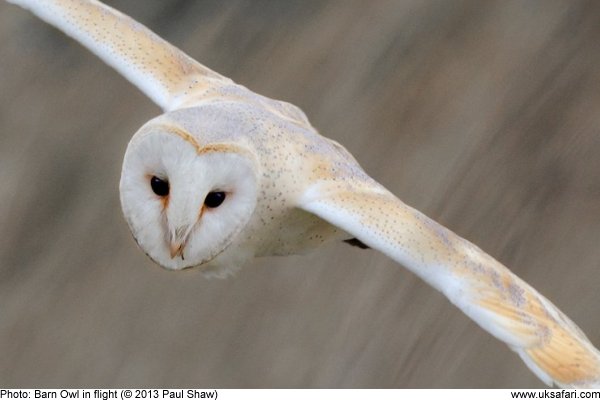
Barn owls are nocturnal hunters, and when you see one flying at night it appears to be all white. This appearance coupled with its eerie screeching call may account for many sightings of "ghosts", as they are sometimes seen hunting for mice in graveyards.
The Barn Owl has such sensitive hearing it is able to exactly locate a field mouse rustling through straw in a pitch dark barn. It can do this because its ears are located at different positions on the sides of its head. One is at the height of its forehead, and the other is level with its nostril.
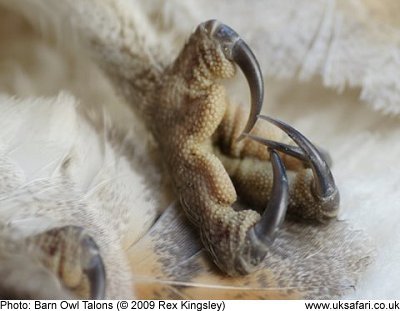
Once a prey item is located the owl silently drops down onto it and grabs it with it's powerful, sharp talons.
Barn Owls do not build nests themselves. Instead they rely on a variety of nesting sites for laying their eggs, such as tree cavities, rock ledges, and ledges in barns. Barn Owls have also been known to nest in burrows in riverbanks.
 Related Pages
- Dissecting a Barn Owl Pellet
- More Barn Owl photos
- UK Safari Owl Section
- UK Safari Birds Section
- Identify other wildlife
- Free Newsletter



 Popular Pages
Amphibians, Bats, Badgers, Beetles, Birds, Birds of Prey, Bumble Bees, Butterflies, Caterpillars, Creepy-Crawlies, Deadly Spiders, Dolphins, Dragonflies, E-Postcards, False Widow Spiders, Free Newsletter, Frogs, Fungi, Garden Spiders, Glow-Worms, Grey Squirrels, Hedgehogs, House Spiders, Ladybirds, Mammals, Marine Mammals, Moths, Owls, Reptiles, Spiders, Toads, Trees, Wildlife Hospitals
Copyright © 2020 G. Bradley UK Safari. All rights reserved | About Us | Links | Contributors